Mutual Exchange vs Transfer List: Which Is Quicker?
Want to move from your council or housing association home? You can wait on the transfer list or find a swap. Here’s how the two compare, and why many tenants do both.
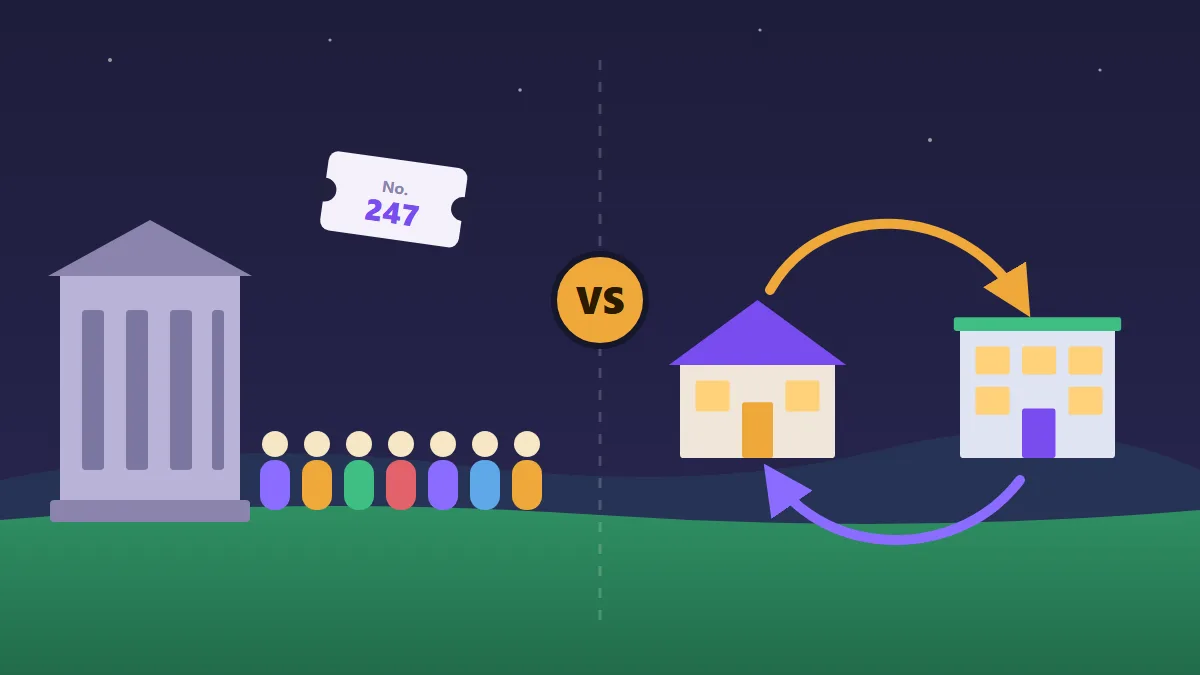
If you're a council or housing association tenant and need to move, there are two main routes. You can join the transfer list and wait to be offered a home, or you can do a mutual exchange and swap with another tenant.
Both can get you where you want to be, but they work very differently. Here's how they compare.
What Is The Transfer List?
The transfer list is your council's housing register, used by tenants who already have a social home and want a different one. You apply, your household is assessed, and you're given a priority, usually a band or points. Then you bid for, or are offered, empty homes as they come up.
Who gets each home is decided by need. Tenants who are overcrowded, have a medical need, or need to move for their safety usually come first.
What Is A Mutual Exchange?
A mutual exchange is a swap. You find another social tenant who wants your home, and you want theirs. Once both landlords agree, you swap tenancies and move. You don't need priority, bands or points, just the right match. Our step-by-step guide explains how it works.
Which Is Quicker?
For most tenants, a mutual exchange.
In many areas, demand for social housing is far higher than the number of homes that become empty. If your need isn't urgent, you could wait years on the transfer list, especially for a house, or in a busy town or city.
A mutual exchange isn't held up by that queue. Once you find a match, the landlords in England have 42 days to decide, and many swaps are done within a few months. Finding the right match is the part that varies. Read more in How Long Does a Mutual Exchange Take?
How They Compare
Choice
- Transfer list: you can only bid on homes that come up, and in some areas you may have only one or two offers before you're moved down the list.
- Mutual exchange: you choose the home, the area and the street. You can look anywhere in the UK, not just your own council.
Who Can Use It
- Transfer list: you usually need a housing need to get real priority. Tenants who simply want a change may be placed in a low band.
- Mutual exchange: you don't need to prove a need. You just need to find someone who wants your home.
The Condition Of The Home
- Transfer list: you get an empty home that the landlord has checked and repaired to their letting standard.
- Mutual exchange: you usually take the home "as seen", including any decorating, flooring and items the other tenant leaves. Landlords still carry out safety checks.
Your Tenancy
- Transfer list: you'll be given a new tenancy for the new home. Many landlords let existing tenants keep the same type of tenancy, but check.
- Mutual exchange: you take over the other tenant's tenancy, so check what type it is before you agree.
Moving Further Away
- Transfer list: usually limited to your own council area, unless a special scheme applies.
- Mutual exchange: you can swap with a tenant in another council or with another landlord anywhere in the UK.
When The Transfer List May Be Better
- You have an urgent need, such as serious overcrowding, a medical need or a safety risk, and you've been given high priority.
- You need a specially adapted home, and the right swap is unlikely to come up.
- Your current home would be hard to swap, for example it's too big for most households looking.
- You'd rather move into a freshly repaired, empty home.
When A Mutual Exchange May Be Better
- You don't have high priority, so the transfer list could take years.
- You want to choose exactly where you live.
- You want to move to a different council area or across the country.
- Your home is the kind many people want, like a house with a garden.
Can You Do Both?
In most cases, yes. Many tenants stay on the transfer list while they look for a swap, so they're not relying on one route. Whichever comes first wins. Check your council's rules, as some take you off the register once you've moved by mutual exchange.
The Short Answer
If you have high priority, the transfer list may move you first. For most other tenants, a mutual exchange is the quicker route, and it gives you far more say in where you end up. Doing both gives you the best chance.
Before you start, check your landlord's rules in Can My Landlord Refuse a Mutual Exchange? Then list your home free and see who wants to swap.