How Does a Mutual Exchange Work? Step by Step
Swapping your council or housing association home is simpler than most people think. Here’s the whole process, step by step, from checking you can swap to getting the keys.
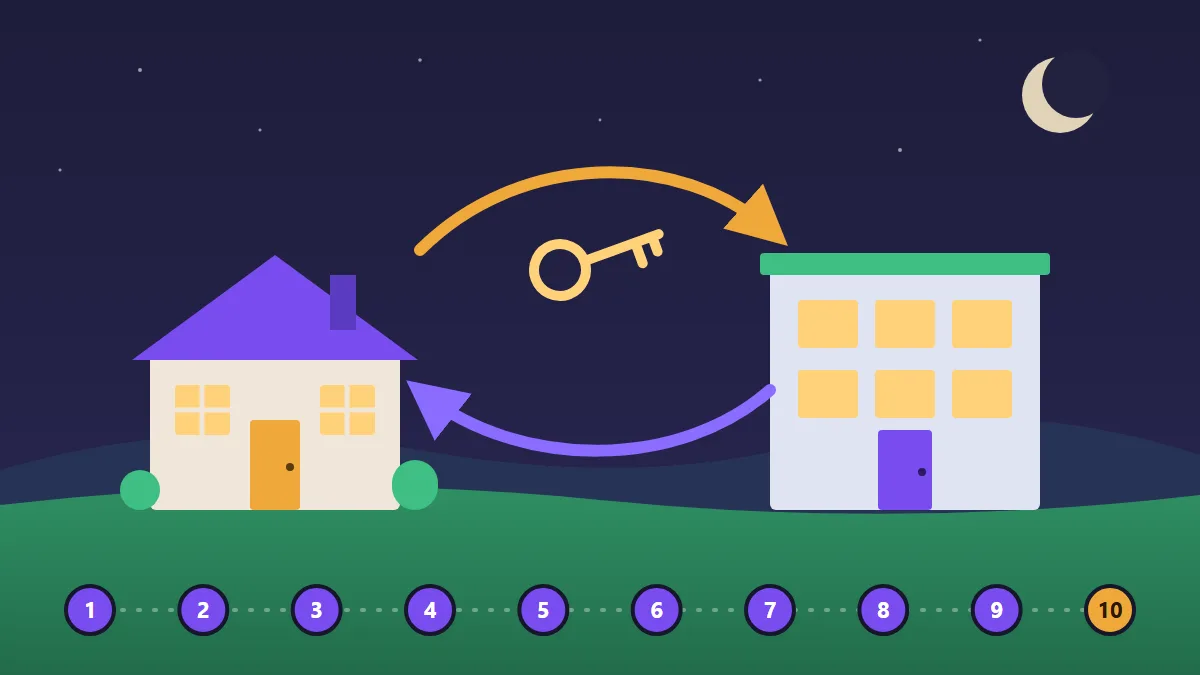
A mutual exchange is when two social housing tenants swap homes. You move into theirs, they move into yours, and you each take over the other's tenancy. No waiting list, no bidding, and no points. Just two households who want what the other has.
It's one of the quickest ways to move for council and housing association tenants. Here's how it works, step by step.
Step 1: Check You Can Swap
Most tenants with a secure or assured tenancy from a council or housing association can swap. You usually can't if you:
- are on an introductory or starter tenancy
- rent privately
- are facing eviction, for example a possession order for rent arrears
Our eligibility checker takes a minute and tells you where you stand.
Step 2: Know What You Want
Think about what really matters before you start looking:
- Where: a town, an area, or near family, work or school
- Size: the number of bedrooms your household needs
- Type: a house, flat or bungalow, and which floor
- Must-haves: a garden, parking, or adaptations
Be realistic about size. Landlords can refuse a swap if the home would be far too big or too small for the household moving in, and a spare bedroom can cut your Housing Benefit or Universal Credit. Our place guides can help you get a feel for new areas.
Step 3: List Your Home
Your listing is your shop window. A good one has:
- clear, bright photos of every room, the garden and the outside
- an honest description, including the good and the not-so-good
- the rent, the landlord, and what's nearby
Tidy up before you take photos. It makes a real difference. Listing your home on Mutual Home Exchange is free.
Step 4: Find Your Match
Search for homes that fit what you want, and check the matches we send you. A match is a home where each household wants what the other has.
Sometimes no one wants your exact swap. A three-way swap can solve that: you move to B's home, B moves to C's, and C moves to yours. They take more organising, but they open up a lot more options.
Step 5: Talk And View
When you find a possible swap, message the other tenant. Ask the questions that matter to you, then arrange to view each other's homes.
Look round properly. Most swaps are "as seen", which means you accept the home as it is. Check:
- damp, windows and heating
- the kitchen and bathroom
- noise, parking and the neighbours
- anything the tenant has added, like sheds or fitted wardrobes, and whether it stays
Step 6: Apply To Both Landlords
Once you've both agreed, each of you applies to your own landlord for permission. Ask your landlord for their mutual exchange form, or check their website. If you're both with the same landlord, it's simpler, but the steps are the same.
Keep a copy of your form and a note of the date you sent it. That date matters in the next step.
Step 7: Wait For The Landlords' Checks
Each landlord checks both households and both homes. This usually means:
- checking rent accounts and tenancy history
- inspecting your home for damage or unapproved changes
- gas and electrical safety checks
- making sure the home is the right size for the household moving in
In England, landlords must give their decision within 42 days. They can only refuse for certain reasons set in law, and they can ask you to clear rent arrears or fix damage first. Our post Can My Landlord Refuse a Mutual Exchange? explains your rights.
Step 8: Sign The Paperwork
When both landlords say yes, you sign a deed of assignment. This passes your tenancy to the incoming tenant, and theirs to you. Remember, you take on their tenancy, so check what type it is before you sign.
Don't move or hand over keys before the paperwork is signed. If you do, you could end up with no tenancy at all.
Step 9: Moving Day
Swaps normally happen on the same day, so plan it together:
- agree a time for each household to move out and in
- book a van or removal firm early
- read the meters and take photos when you leave and arrive
- leave a handover note with bin days, the boiler and anything quirky
Step 10: Settle In
After the move, tell everyone who needs your new address:
- your energy suppliers and water company
- the council for council tax
- Universal Credit or Housing Benefit
- your GP, schools, bank and the DVLA
Then put the kettle on. You've done it.
How Long Does It Take?
Finding the right swap is usually the longest part, and that depends on where you live and what you're looking for. Once you've agreed a swap, the landlord stage in England should take no more than 42 days, and the move itself often follows a few weeks later.
Ready To Start?
See how our site helps at each stage on the how it works page, or list your home free and start looking for your swap today.