Wet Rooms and Grants: What to Know About Adapted Bathrooms Before You Swap
A bathroom that's genuinely safe to use on your own isn't a luxury - it's often the single feature that decides whether independent living is actually possible. Here's what "adapted bathroom" really means, and how the funding behind it works.
Before his bathroom was adapted, Tom timed his showers for whenever someone else was home. Not because he needed help exactly - but because stepping over the bath edge on a bad day felt like a risk worth having someone within earshot for. It wasn't a dramatic problem. It was just one more thing quietly shaping his day around a room that wasn't built for how he actually moved through it.
A genuinely adapted bathroom changes that kind of calculation completely. It's one of the features that comes up again and again when tenants tell us what actually mattered in choosing their next home - often more than bedroom count or garden size.
What "adapted bathroom" usually means
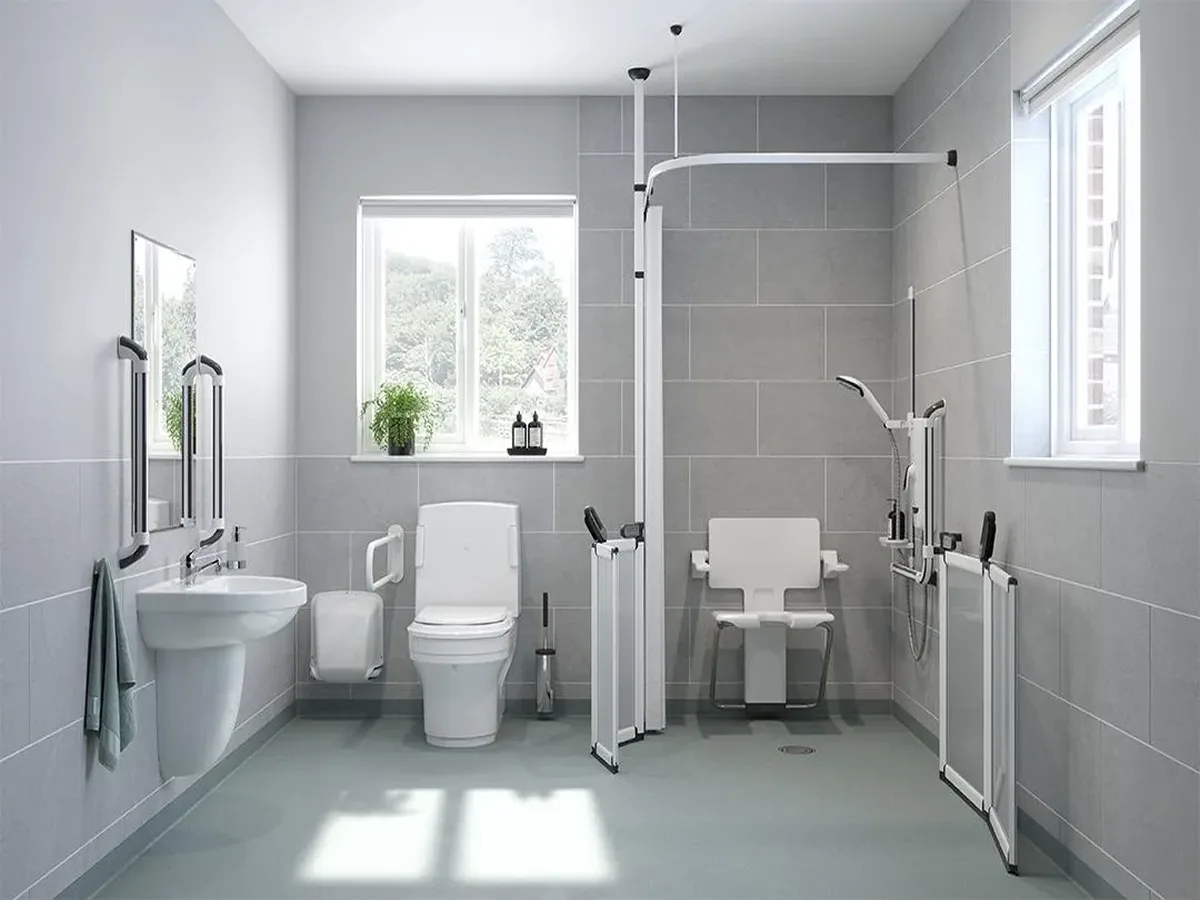
The single biggest change is almost always the shower. A proper wet room - sometimes called a level-access shower - has a completely flat, waterproofed floor with no step or lip to cross, sloped gently toward a drain instead. That sounds like a small detail until you've lived with the alternative: a raised shower tray or bath edge that has to be stepped or lifted over every single day, on every single kind of day, good or bad.
Beyond the shower itself, a fully adapted bathroom might also include:
- Grab rails positioned around the toilet, shower, or both
- A raised or wash-dry toilet, reducing the need to bend or twist
- Non-slip flooring throughout, not just inside the shower area
- Enough clear floor space for a wheelchair to turn, or for a carer to assist safely if needed
- Lever-style taps rather than twist handles, for anyone who struggles with grip
How these bathrooms actually get built
As with kitchens, most adapted bathrooms in social housing were funded through a Disabled Facilities Grant - up to £30,000 in England, means-tested against household income and savings. The process starts with a free occupational therapist assessment, arranged through the council, where a professional actually watches how you use your current bathroom and specifies exactly what would help. Their report is what unlocks the funding, so it's not something you can shortcut by simply asking a landlord to fit a grab rail - proper adaptations go through this assessment first, which is exactly why an already-adapted bathroom is genuinely valuable to find, rather than something you could quickly replicate yourself after moving in.
If you're moving somewhere that isn't adapted yet but you know it will need to be, it's worth starting that conversation with your new landlord as early into the exchange process as you can. Assessments and grant approvals take time, and there's no reason that clock can't start ticking before moving day rather than after it.
What to actually ask before agreeing to a swap
A listing photo of a bathroom rarely tells you what you actually need to know. Worth asking directly:
- Is the shower a true level-access wet room, or a shower tray with a lip?
- Were grab rails and other fittings installed through a council-funded adaptation, or added privately - and will they stay through the exchange?
- Is there room for a wheelchair to fully turn, or just enough to get through the door?
- If it isn't adapted yet, has anyone in the property already started an occupational therapy assessment that might carry over?
Making it easy to find on Mutual Home Exchange
If your bathroom has been adapted, say so clearly in your listing - tick "Adapted," and use your description to note the specifics: wet room, grab rails, raised toilet, whatever genuinely applies. It's the difference between someone scrolling past your listing because they can't tell, and someone recognising immediately that your home solves a problem they've been carrying around for months.
Ready to look? Browse current listings and filter for adapted homes - or if you're the one listing, a few extra lines in your description could be exactly what turns your old bathroom into someone else's relief.
Looking for an adapted home? Tick "Disabled adapted" in the filters on our home search, and read what it's like to live in the towns you are considering.