What it's like to live in Gillingham, Dorset
Gillingham is a small market town in north Dorset, home to around 11,500 people, sitting in the green Blackmore Vale countryside. It is quiet, practical and family-sized rather than lively, and suits people who want a slower pace with real amenities on hand. A railway station and a strong town secondary school are two of its biggest draws.
"I'd move here" adds Gillingham to the areas on your listing, so homes here are matched to you first.
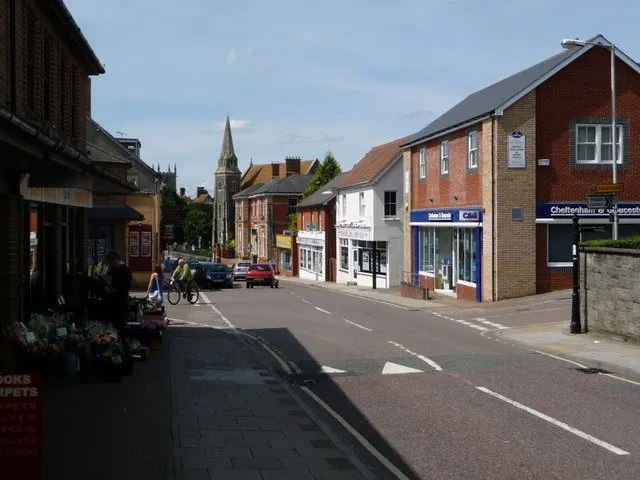
Gillingham sits in the north of Dorset, close to the Wiltshire and Somerset borders, in the countryside of the Blackmore Vale. Shaftesbury is its nearest neighbour town, and the larger centres of Salisbury, Yeovil and Bournemouth lie further afield. The postcode district is SP8.
People move here for a mix of countryside and connection. The town is small, with roughly 11,500 residents, but it has its own railway station and a full set of everyday services, which is unusual for a place this size in rural Dorset. That combination is the main reason Gillingham keeps growing and why swappers from bigger towns take a look.
It is worth being honest about the trade-off. Gillingham is not a city and does not pretend to be: nightlife, big shopping centres and specialist services mean a journey. In exchange you get open country on the doorstep, a compact town where you can reach most things on foot, and housing costs across the wider Dorset council area that sit at the lower end for social tenants. If you want somewhere calm with the option of getting out easily, it is worth considering.
Swapping to Gillingham: key facts
Can I swap my council or housing association home to Gillingham?
Yes, if you are already a council or housing association tenant. Mutual exchange means swapping homes with another social tenant, so it does not depend on the council waiting list: you need a tenant in or near Gillingham who wants your area, and both landlords must agree. Landlords have 42 days to decide and can only refuse on set legal grounds.
How long is the council housing waiting list in Gillingham?
6,783 households were on the Dorset housing register on 31 March 2025, up 25% on a year earlier. 981 social homes were let through the council in 2024 to 2025, roughly 6.9 households for every home let. Source: Local Authority Housing Statistics, Ministry of Housing, Communities and Local Government.
How much is social rent in Gillingham?
Average weekly social rents in the Dorset council area in 2024/25: 1 bed £0 council, £100 housing association; 2 bed £130 council, £118 housing association; 3 bed £0 council, £135 housing association. Affordable rent homes cost more, typically 60 to 80% of market rent. Source: Regulator of Social Housing.
How much social housing is there in Gillingham and who owns it?
12.3% of homes in the Dorset council area are social housing (council 1.3%, housing association 11%), against 17.1% across England, according to the 2021 Census. The biggest social landlords there are Synergy Housing Limited (7,360 homes), Magna Housing Limited (5,936 homes) and Sovereign Network Group (4,965 homes).
How Busy Is The Swap Market In Gillingham?
Figures as of 24 October 2026, updated every night. The waiting list figure is from 2024 to 2025 government data.
Which homes are available to swap near Gillingham?
Homes are shown near their address, not on it. Contains OS data © Crown copyright and database right. Source: Office for National Statistics, Open Government Licence.
No homes listed within 5 miles at the moment. New homes are listed every week: see homes across Dorset, use the alert form below, or list your own home so tenants here can find you.
What is housing like in Gillingham and who lives there?
Housing in the Dorset council area leans heavily towards ownership: 70.4% of homes are owned, 16.3% are privately rented, and 12.3% are social rented. That social share is below the England figure of 17.1%, and most of it is housing association stock at 11%, with council housing making up just 1.3%. So in practice, a swap here usually means a housing association tenancy.
The largest social landlords in the area are Synergy Housing Limited with around 7,360 homes and Magna Housing Limited with 5,936, followed by Sovereign Network Group with 4,965, Stonewater Limited with 1,262 and Abri Group Limited with 785. Average weekly social rents in Dorset for 2024/25 were roughly £100 for a one bed, £118 for two and £135 for three.
The age profile is older than the national picture, with 28.2% aged 45 to 64 and 29.6% over 65, while 15.1% are under 16. Gillingham itself, with its schools and newer estates, tends to attract more families than the Dorset average. For context on demand, Dorset's housing register held 6,783 households at March 2025, with 981 social homes let through the council in 2024-25.
Who owns the homes
Share of homes in the Dorset council area, Census 2021.
Ages
Share of people in each age group, Census 2021.
Council waiting list and lettings
Households on the register by the size of home they need.
That is roughly 6.9 households waiting for every social home let in a year. Mutual exchange doesn't use the waiting list: if you already have a council or housing association home, swapping with another tenant can be a quicker way to move to Gillingham.
A register counts households who have applied, so it isn't a simple queue: some are already social tenants hoping to transfer, and people can be on more than one council's list.
Typical weekly social rents in the Dorset council area
Social rent averages for 2024/25. Affordable rent homes cost more, typically 60 to 80% of market rent.
Biggest social landlords in the council area
- Synergy Housing Limited7,360 homes
- Magna Housing Limited5,936 homes
- Sovereign Network Group4,965 homes
- Stonewater Limited1,262 homes
- Abri Group Limited785 homes
- Aster 3 Limited560 homes
- East Boro Housing Trust Limited394 homes
- Aster Communities391 homes
What is it like to live in Gillingham?
Day to day, almost everything sits close together. Waitrose, Asda and Lidl are all within a few hundred metres of the centre, with a Co-op nearby and an Aldi about a mile out, so a big shop does not mean a long trip. Three pharmacies serve the town, including one attached to the Barn Surgery, and Gillingham Library is right in the middle of things.
The streets mix older stone and brick around the centre with newer estates spreading outward, and the River Stour threads through. There are pubs within easy reach of the centre, including The Phoenix Inn and the Red Lion, plus The Buffalo and The Dolphin a short walk further out. The Gillingham Youth & Community Centre and a community office give the town a focal point for local groups and activities.
What are the schools and family life like in Gillingham?
For a town of this size, Gillingham is well served for schools. Gillingham Primary School is right in the middle of town, with Wyke Primary School and St Mary the Virgin Church of England Primary School both under a mile away. A little further out are Milton-on-Stour Church of England Primary School and Motcombe CofE Primary School, both within easy driving distance.
Secondary education is a real selling point. Gillingham School sits around a third of a mile from the centre, so most families in town can get there without a long journey or a school bus. Port Regis School, an independent school, lies just under three miles away.
Beyond school hours, Gillingham Library is a short walk from the centre and the Gillingham Youth & Community Centre gives older children and local groups somewhere to go. Village halls at East Stour, West Stour and Motcombe host activities for the surrounding villages. The countryside around the town is a genuine plus for families who like walks, bikes and getting outdoors without a drive. Always check current admissions and catchment details with Dorset Council before you plan a move.
Primary schools
- Gillingham Primary Schoolnearby
- Wyke Primary School0.5 mi
- St Mary the Virgin Church of England Primary School0.7 mi
- Milton-on-Stour Church of England Primary School1.3 mi
- Motcombe CofE Primary School2.6 mi
Secondary schools
- Gillingham School0.3 mi
- Port Regis School2.8 mi
Libraries
- Gillingham Librarynearby
What shops and everyday essentials are in Gillingham?
Supermarkets
- Waitrosenearby
- Asdanearby
- Lidlnearby
- Co-op Food0.3 mi
- Aldi1 mi
Pharmacies
- Dudley Taylor Pharmacynearby
- Barn Surgery Pharmacynearby
- Peacemarsh Pharmacy0.8 mi
How do you get around Gillingham?
Gillingham station is about a third of a mile from the centre, which makes the town unusually well connected for rural Dorset. For anyone who does not drive, or who would rather not rely on a car every day, that station is the single biggest practical advantage of living here.
On foot, the town works well. The schools, library, supermarkets, pharmacies and pubs listed above all fall within a mile or so of the centre, and much of that is a flat, walkable distance. If you live on one of the newer estates on the edge, the walk into town is longer but still manageable for most people.
By car, Gillingham is handy for reaching Shaftesbury and the surrounding villages, and the A303 corridor is the usual route for longer trips east and west. Parking in a town this size is generally less of a headache than in a city. Buses do serve the town and the villages around it, but services in rural Dorset are limited compared with urban areas, so check the specific routes and times you would need before committing to a swap.
Train stations
- Gillingham0.3 mi
What is there to do in Gillingham?
Gillingham is a town for everyday pleasures rather than big attractions. There is a decent cluster of pubs: The Phoenix Inn and the Red Lion sit in the centre, The Bar & Grill is a couple of minutes away, and The Buffalo and The Dolphin are a short walk out. That gives you a reasonable choice for a meal or a drink without leaving town.
For exercise, The Threshold is just over a mile away, with Fitness By Design and BMV Health & Fitness a little further out in the surrounding area. The library in the centre is a quiet resource that is easy to overlook until you need it.
The real draw, though, is what surrounds the town. Gillingham sits in the Blackmore Vale, with the River Stour running through and open countryside in every direction, so walking and cycling routes start close to home. Village halls in Motcombe, East Stour and West Stour run local events for the wider area. If you want theatres, cinemas and bigger days out, you will be travelling, but the station makes that easier than in most rural Dorset towns.
Gyms
- The Threshold1.1 mi
- Fitness By Design2.2 mi
- BMV Health & Fitness2.6 mi
Pubs and bars
- The Phoenix Innnearby
- Red Lionnearby
- The Bar & Grillnearby
- The Buffalo0.7 mi
- The Dolphin0.7 mi
Community centres
- Community Officenearby
- Gillingham Youth & Community Centrenearby
- East Stour Village Hall2 mi
- West Stour Village Hall2.7 mi
- Motcombe Memorial Hall2.8 mi
What is work and the local economy like in Gillingham?
Figures for the wider Dorset council area show 52.1% of adults in work, below the England average of 57.4%. That gap is mostly about age rather than a shortage of jobs: 29.6% of Dorset residents are 65 or over, against 18.4% across England, so a larger share of the population has retired.
Unemployment in the Dorset council area is low, at 2.1% compared with 3.5% nationally. Unemployment-related benefit claims in September 2026 stood at 2.3% of 16 to 64 year olds, against 4% for England. In short, people who want work in Dorset generally find it, though rural pay and the mix of available roles are worth researching for your own line of work.
For Gillingham specifically, the station matters for employment as much as for leisure, since it widens the range of jobs you can realistically reach. Local supermarkets, schools and services provide work within the town itself. If your job is tied to a bigger city, think carefully about the commute before you agree a swap.
Figures are for the Dorset council area, Census 2021 and ONS claimant count.
How safe is Gillingham?
Like every town centre, Gillingham has police incidents logged each month. In August 2026 there were 52 within about a mile of the centre, made up of:
Source: data.police.uk street-level crime. Counts cover a fixed one-mile radius around the centre, so busy high streets and stations always record far more than the residential streets around them, and most incidents are minor. Compare like with like: a similar-sized town centre, not a village.
Is Gillingham a good place for social housing tenants?
If Gillingham sounds like the right fit, the practical next step is to get your own home listed on Mutual Home Exchange and add Gillingham to your desired areas. Swaps only happen when both sides can see each other, so a complete, honest listing with clear photos does most of the work for you.
Write up what you have fairly: the number of bedrooms, the floor, any garden or parking, the state of the place and what is good about your area. Someone looking to move the other way will have their own reasons, and the details you think are ordinary are often exactly what they need. Adding a few nearby towns alongside Gillingham widens your options without compromising much, since this part of Dorset is well connected by road.
Before you commit, come and have a proper look. Walk from the home to the station, to the school you would use and into the town centre, and try it on a weekday rather than a quiet Sunday. Then check with your landlord and the other tenant's landlord, as both must approve a mutual exchange before anything is agreed.
Tell me when a home appears near Gillingham
One email, the first time a council or housing association home is listed within your chosen distance. No newsletter, no spam.
Live in Gillingham? Add a photo
Tenants' own photos help other people picture the place. Approved photos are credited to you. Submit a photo.
Nearby place guides
Thinking of moving a little further? Compare homes to swap, rents and local landlords in places near Gillingham.
All place guides in Dorset → · All place guides in the South West → · All regions →