What it's like to live in Reading
Reading is a big, busy Berkshire town of around 162,666 people, with a proper town-centre buzz rather than a sleepy feel. It suits people who want shops, work and trains close at hand, and families who like being near green space. Forbury Gardens sits just behind the main shopping streets, and the Royal Berkshire Hospital is a short hop away.
"I'd move here" adds Reading to the areas on your listing, so homes here are matched to you first.
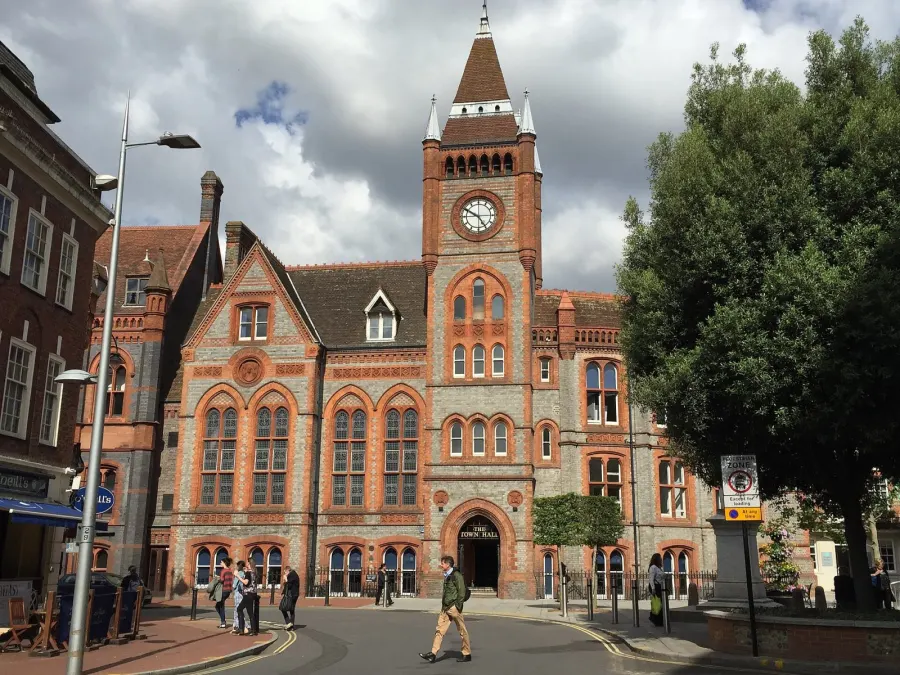
Reading sits in Berkshire, in the Thames Valley, west of London and east of Newbury. It is one of the largest towns in the South East, big enough to feel like a small city, and it has long been a place people move to for work and connections rather than quiet.
The pull is mostly practical. Reading has a major railway station, a strong jobs market and a town centre packed with shops, cinemas and places to eat. For tenants moving from quieter parts of the country, the change of pace is real, but so is the choice: more employers, more services, more going on.
The council area has around 174,224 residents and a notably young age profile, with a third aged 25 to 44. That shows in the town's feel: lots of people in work, plenty of families, and a steady flow of newcomers. If you want somewhere compact, well connected and never dull, Reading is worth a serious look. If you are after village calm, central Reading will not give you that.
Swapping to Reading: key facts
Can I swap my council or housing association home to Reading?
Yes, if you are already a council or housing association tenant. Mutual exchange means swapping homes with another social tenant, so it does not depend on the council waiting list: you need a tenant in or near Reading who wants your area, and both landlords must agree. Landlords have 42 days to decide and can only refuse on set legal grounds. In 2024 to 2025, 40 council homes in Reading changed tenants by mutual exchange.
How long is the council housing waiting list in Reading?
3,682 households were on the Reading housing register on 31 March 2025, up 32% on a year earlier. 442 social homes were let through the council in 2024 to 2025, roughly 8.3 households for every home let. Source: Local Authority Housing Statistics, Ministry of Housing, Communities and Local Government.
How much is social rent in Reading?
Average weekly social rents in the Reading council area in 2024/25: 1 bed £109 council, £119 housing association; 2 bed £124 council, £141 housing association; 3 bed £139 council, £163 housing association. Affordable rent homes cost more, typically 60 to 80% of market rent. Source: Regulator of Social Housing.
How much social housing is there in Reading and who owns it?
16.1% of homes in the Reading council area are social housing (council 9.1%, housing association 7.1%), against 17.1% across England, according to the 2021 Census. The biggest social landlords there are Reading Borough Council (6,827 homes), Peabody Trust (1,013 homes) and Southern Housing (789 homes).
How Busy Is The Swap Market In Reading?
Figures as of 23 October 2026, updated every night. The waiting list figure is from 2024 to 2025 government data.
Which homes are available to swap near Reading?
Homes are shown near their address, not on it. Contains OS data © Crown copyright and database right. Source: Office for National Statistics, Open Government Licence.
No homes listed within 5 miles at the moment. New homes are listed every week: see homes across Berkshire, use the alert form below, or list your own home so tenants here can find you.
What is housing like in Reading and who lives there?
Reading's housing mix is unusual. Just over half of homes are owned at 50.4%, but private renting is high at 31.9%, well above the national pattern. Social rented homes make up 16.1%, split between council at 9.1% and housing associations at 7.1%, slightly below the England figure of 17.1%.
Social rents in the council area for 2024/25 averaged £111 a week for a one bed, £131 for a two bed and £146 for a three bed. Reading Borough Council is by far the biggest social landlord with 6,827 homes, followed by Peabody Trust with 1,013, Southern Housing with 789, Metropolitan Housing Trust with 704 and London & Quadrant with 518.
The population skews young: 19% are under 16 and 33.1% are aged 25 to 44, while only 12% are 65 or over, against 18.4% nationally. Demand for social housing is high, with 3,682 households on the council's register at March 2025 and 442 homes let in 2024-25. A register is not a simple queue, which is one reason mutual exchange matters here: 40 council homes were swapped that way.
Council waiting list and lettings
Households on the register by the size of home they need.
That is roughly 8.3 households waiting for every social home let in a year. Mutual exchange doesn't use the waiting list: if you already have a council or housing association home, swapping with another tenant can be a quicker way to move to Reading.
A register counts households who have applied, so it isn't a simple queue: some are already social tenants hoping to transfer, and people can be on more than one council's list.
Typical weekly social rents in the Reading council area
| Size | Council | Housing association |
|---|---|---|
| Bedsit | £95 | £96 |
| 1 bed | £109 | £119 |
| 2 bed | £124 | £141 |
| 3 bed | £139 | £163 |
| 4 bed | £158 | £184 |
Social rent averages for 2024/25. Affordable rent homes cost more, typically 60 to 80% of market rent.
Biggest social landlords in the council area
- Reading Borough Council6,827 homes
- Peabody Trust1,013 homes
- Southern Housing789 homes
- Metropolitan Housing Trust Limited704 homes
- London & Quadrant Housing Trust518 homes
- Stonewater Limited510 homes
- Home Group Limited398 homes
- Sovereign Network Group346 homes
What is it like to live in Reading?
Around RG1 the streets are dense and varied: red-brick terraces, flats above shops, and newer blocks mixed in with Victorian housing. Katesgrove and Coley sit on one side, the town centre on the other, so you are rarely more than a few minutes from a parade of shops. Sainsbury's, Seoul Plaza and Jackson Corner Food Centre are all close, alongside independent food shops that reflect how mixed Reading's population is.
Day to day, the practical things are nearby. Reading Central Library is a few minutes' walk, pharmacies including Boots and Superdrug sit in the centre, and smaller ones like Milman Road and Coley Park serve the residential streets. Green space is close too, with Holy Brook Nook, Victoria Park, Coley Recreation Ground and Robert Hewitt Recreation Ground all within a short walk or ride. It is a town that can feel loud near the centre, but quietens quickly on the side streets.
What are the schools and family life like in Reading?
There is a good spread of primary schools close to RG1. Katesgrove Primary School and Coley Primary School are both around 0.3 miles away, with Civitas Academy at 0.5 miles, E P Collier Primary School and All Saints Church of England Aided Infant School both roughly 0.6 miles. Being able to walk the school run matters in a town where parking is tight.
For older children, Kendrick School is about 0.4 miles away and Reading School under a mile, both long-established selective schools. The Deenway Montessori School, The Abbey Senior School and Red Balloon Reading are also within a mile, so there is a mix of state and independent provision. Check admission arrangements carefully, as they vary.
Family life away from school is well served. Victoria Park, Coley Recreation Ground and Robert Hewitt Recreation Ground give space for play and football, and Forbury Gardens is a calmer spot in the centre. Reading Central Library and Caversham Library are useful for free, warm, rainy-day options, and community centres such as The Carey Centre and The Oasis Community Centre run local activities.
Primary schools
- Katesgrove Primary School0.3 mi
- Coley Primary School0.3 mi
- Civitas Academy0.5 mi
- E P Collier Primary School0.6 mi
- All Saints Church of England Aided Infant School0.6 mi
Secondary schools
- The Deenway Montessori School0.4 mi
- Kendrick School0.4 mi
- The Abbey Senior School0.6 mi
- Red Balloon Reading0.7 mi
- Reading School0.9 mi
Parks
- Holy Brook Nook0.3 mi
- Forbury Gardens0.4 mi
- Robert Hewitt Recreation Ground0.5 mi
- Victoria Park0.6 mi
- Coley Recreation Ground0.6 mi
Libraries
- Reading Central Librarynearby
- The Learning Hub0.6 mi
- University Reading Room & Special Collections0.7 mi
- Learning Resources Centre0.9 mi
- Caversham Library1 mi
What shops and everyday essentials are in Reading?
Supermarkets
- Seoul Plazanearby
- Sainsbury'snearby
- Jackson Corner Food Centrenearby
- Best Foods0.4 mi
- Bestfood Supermarket0.4 mi
Pharmacies
- Bootsnearby
- Superdrugnearby
- Saood Pharmacy0.3 mi
- Milman Road Pharmacy0.7 mi
- Coley Park0.8 mi
Hospitals
- Spire Dunedin Hospital0.6 mi
- Royal Berkshire Hospital0.7 mi
- Princes House0.7 mi
- Berkshire Independent Hospital0.9 mi
- Sue Ryder Duchess of Kent Hospice1.3 mi
Shopping centres
- Broad Street Mallnearby
- The Oraclenearby
- Harris Arcadenearby
How do you get around Reading?
Reading station is the big one, about 0.4 miles from RG1, and it is one of the busiest interchanges outside London. Reading West is also close at around 0.7 miles, with Reading Green Park, Earley and Tilehurst all within three miles. That gives you real options if your work or family takes you out of town regularly.
For anyone who does not drive, central Reading is one of the easier places in the South East to manage. The shopping centres, library, pharmacies and supermarkets are all within half a mile, so a lot of daily life can be done on foot. Buses run through the town centre and link the outer estates, which helps if you settle slightly further out.
If you do drive, be realistic. Town-centre parking is limited and often paid, and traffic builds at peak times. Many central flats have little or no parking. The flip side is that the M4 is reachable for longer journeys, and the compact layout means short trips are genuinely short. Plenty of households here manage with one car, or none at all.
Train stations
- Reading0.4 mi
- Reading West0.7 mi
- Reading Green Park2.2 mi
- Earley2.6 mi
- Tilehurst2.7 mi
What is there to do in Reading?
For a town of its size, Reading gives you plenty. The Oracle and Broad Street Mall cover mainstream shopping, with Harris Arcade for something smaller and more independent. Two cinemas sit within a quarter of a mile, the Vue and the Reading Biscuit Factory, and the Reading Film Theatre is about 1.5 miles out for different programming.
Eating and drinking is a strong point. The centre has pubs and bars on the doorstep, including The Horn, Sweeney & Todd, Zero Degrees and Gun Street Garden. Nightlife is genuinely busy too, with Purple Turtle, EVA's, Lola Lo, Club Era and Popworld all within a few minutes' walk. If you live right in the middle, expect some weekend noise.
For quieter days, Forbury Gardens is the classic choice, with Holy Brook Nook, Victoria Park and Coley Recreation Ground nearby. Gyms are easy to find, from The Gym and 9Round to Unleashed Performance Gym and Pilates of Berkshire, and there is even a Ping Pong Parlour in the centre. Community groups like Reading Bridge Club and the Oddfellows add a more local, social side.
Gyms
- The Gymnearby
- Ping Pong Parlournearby
- 9Roundnearby
- Unleashed Performance Gym0.3 mi
- Pilates of Berkshire0.3 mi
Cinemas
- Reading Biscuit Factorynearby
- Vuenearby
- Reading Film Theatre1.5 mi
Pubs and bars
- The Hornnearby
- Sweeney & Toddnearby
- Be At Onenearby
- Gun Street Gardennearby
- Zero Degreesnearby
Nightlife
- Purple Turtlenearby
- EVA'snearby
- Lola Lonearby
- Club Eranearby
- popworldnearby
Community centres
- The forgotten British gurkhanearby
- The Carey Centrenearby
- The Oasis Community Centre0.3 mi
- The Reading Bridge Club0.3 mi
- Reading District Oddfellows0.4 mi
What is work and the local economy like in Reading?
Reading has one of the healthier jobs pictures in the country. Across the council area, 62.9% of adults are in work, comfortably above the England figure of 57.4%. Unemployment sits at 4.1%, a little above the 3.5% England average, and benefit claimants among 16 to 64 year olds were 4.2% in September 2026 against 4% nationally.
Those numbers tell you something about the town's character. A third of residents are aged 25 to 44, and many are here because of work. The town centre itself is a big employer through retail, hospitality and services, and the Royal Berkshire Hospital and other health sites nearby add a steady stream of jobs.
The station also makes Reading a commuter base in both directions, which widens your options without needing to move again. For tenants who want to change jobs or pick up extra hours, that choice is a genuine advantage. It is worth saying that competition for work and homes alike is strong here, so plan a move with an eye on both.
Figures are for the Reading council area, Census 2021 and ONS claimant count.
How safe is Reading?
Like every town centre, Reading has police incidents logged each month. In August 2026 there were 948 within about a mile of the centre, made up of:
- Anti-social behaviour reports97
- Vehicle crime36
- Bicycle theft16
- Shoplifting179
- Other theft89
- Theft from the person13
Source: data.police.uk street-level crime. Counts cover a fixed one-mile radius around the centre, so busy high streets and stations always record far more than the residential streets around them, and most incidents are minor. Compare like with like: a similar-sized town centre, not a village.
Is Reading a good place for social housing tenants?
If Reading looks right for you, the practical next step is to get your own home listed. A clear, honest advert with good photos, the number of bedrooms, the floor and whether there is parking or a garden does most of the work. Tenants looking at your area want to picture themselves living there, so be straightforward about the good and the less good.
Then set Reading as a desired area. You can add more than one place, so it is worth including the nearby districts and the wider Berkshire area if you would consider them. The more flexible your list, the better your chances of a match that actually suits both households.
Mutual exchange is a two-way deal, so keep in touch with anyone who contacts you, reply promptly and be ready to talk about what you each need. Both landlords have to approve the swap, so check your tenancy type and any rent arrears early. It takes patience, but for many tenants it is the most realistic route into a town like this.
Tell me when a home appears near Reading
One email, the first time a council or housing association home is listed within your chosen distance. No newsletter, no spam.
Live in Reading? Add a photo
Tenants' own photos help other people picture the place. Approved photos are credited to you. Submit a photo.
Nearby place guides
Thinking of moving a little further? Compare homes to swap, rents and local landlords in places near Reading.
All place guides in Berkshire → · All place guides in the South East → · All regions →