What it's like to live in Southampton
What is it like to live in Southampton? It is a large, down-to-earth port city in Hampshire, with a real centre rather than a scattering of suburbs. It suits people who want shops, work and nightlife close by, and families who value green space in town. Central Parks and Palmerston Park sit minutes away, and West Quay shopping centre is on the doorstep.
"I'd move here" adds Southampton to the areas on your listing, so homes here are matched to you first.
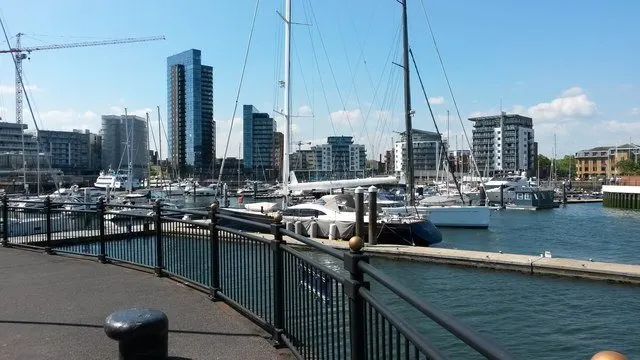
Southampton is a port city on the Hampshire coast, home to around 271,000 people. This guide looks at the SO14 part of it, the city centre, where the shops, the parks and the station all sit within a short walk of each other.
It is a busy, mixed, working city rather than a quiet seaside town. Container ships and cruise liners come and go, students fill the cafes in term time, and the centre has the kind of choice you only get in a proper city: two shopping centres, cinemas, gyms, libraries and plenty of places to eat.
That comes with city trade-offs. Centre living means noise, traffic and crowds at weekends. Not everyone wants that, and it is worth visiting on a Saturday afternoon as well as a weekday morning before you decide. If you like having everything on the doorstep and good rail links out, Southampton is hard to beat for the money.
Swapping to Southampton: key facts
Can I swap my council or housing association home to Southampton?
Yes, if you are already a council or housing association tenant. Mutual exchange means swapping homes with another social tenant, so it does not depend on the council waiting list: you need a tenant in or near Southampton who wants your area, and both landlords must agree. Landlords have 42 days to decide and can only refuse on set legal grounds.
How long is the council housing waiting list in Southampton?
9,668 households were on the Southampton housing register on 31 March 2025, up 8% on a year earlier. 1,267 social homes were let through the council in 2024 to 2025, roughly 7.6 households for every home let. Source: Local Authority Housing Statistics, Ministry of Housing, Communities and Local Government.
How much is social rent in Southampton?
Average weekly social rents in the Southampton council area in 2025/26: 1 bed £88 council, £117 housing association; 2 bed £100 council, £132 housing association; 3 bed £123 council, £149 housing association. Affordable rent homes cost more, typically 60 to 80% of market rent. Source: Regulator of Social Housing.
How much social housing is there in Southampton and who owns it?
21.9% of homes in the Southampton council area are social housing (council 14.6%, housing association 7.3%), against 17.1% across England, according to the 2021 Census. The biggest social landlords there are Southampton City Council (15,701 homes), The Swaythling Housing Society Limited (1,545 homes) and Hyde Housing Association Limited (1,170 homes).
How Busy Is The Swap Market In Southampton?
Figures as of 5 November 2026, updated every night. The waiting list figure is from 2024 to 2025 government data.
Which homes are available to swap near Southampton?
Homes are shown near their address, not on it. Contains OS data © Crown copyright and database right. Source: Office for National Statistics, Open Government Licence.
No homes listed within 5 miles at the moment. New homes are listed every week: see homes across Hampshire, use the alert form below, or list your own home so tenants here can find you.
What is housing like in Southampton and who lives there?
Social renting is a little more common here than nationally: 21.9% of homes in the council area are social rented, against 17.1% across England, split between council homes at 14.6% and housing associations at 7.3%. Nearly half of homes are owned and 29.2% are privately rented, which reflects the big student and young-worker population.
Southampton City Council is by far the biggest social landlord with around 15,892 homes, followed by Swaythling Housing Society, Hyde, Abri and Vivid.
Rents are modest. Average weekly social rents in the council area for 2024/25 were about £96 for a one bed, £105 for two beds and £125 for three. For context on demand, 9,668 households were on the council's housing register at 31 March 2025, with 1,267 homes let through the council in 2024-25. A register is not a simple queue, which is one reason a mutual exchange is often the faster route.
Who owns the homes
Share of homes in the Southampton council area, Census 2021.
Ages
Share of people in each age group, Census 2021.
Council waiting list and lettings
Households on the register by the size of home they need.
That is roughly 7.6 households waiting for every social home let in a year. Mutual exchange doesn't use the waiting list: if you already have a council or housing association home, swapping with another tenant can be a quicker way to move to Southampton.
A register counts households who have applied, so it isn't a simple queue: some are already social tenants hoping to transfer, and people can be on more than one council's list.
Typical weekly social rents in the Southampton council area
Social rent averages for 2025/26. Affordable rent homes cost more, typically 60 to 80% of market rent.
Biggest social landlords in the council area
- Southampton City Council15,701 homes
- The Swaythling Housing Society Limited1,545 homes
- Hyde Housing Association Limited1,170 homes
- Vivid Housing Limited1,098 homes
- Abri Group Limited1,061 homes
- Sovereign Network Group860 homes
- Stonewater Limited799 homes
- The Society of St James370 homes
Compare these landlords against every other on tenant satisfaction, repairs and complaints.
What is it like to live in Southampton?
Day to day, SO14 is convenient in a way that saves money. Asda Southampton Superstore, Little Waitrose, Poundland and independent and Asian grocers are all within a few minutes. Boots Pharmacy is nearby, with several other chemists within half a mile.
The city feels young. Across the council area, 15.9% of residents are aged 16 to 24, well above the England figure of 10.6%, and 30.4% are 25 to 44. That shows in the mix of cafes, bars and community groups, from Kingsland Community Centre to the Southampton Ukrainian Community Group.
What are the schools and family life like in Southampton?
There is a decent spread of primary schools close by. St Mary's C of E Primary and St Johns Primary & Nursery are both about half a mile away, with Springhill Catholic Primary, Banister Primary and Mount Pleasant Junior all within a mile. For older children, St Mark's C of E School is just over a mile and Upper Shirley High School about 1.8 miles. Fitrah SIPS, an Islamic primary and secondary, is closer still.
Always check the latest inspection reports and admission rules yourself, as catchments and places change year to year.
For family life outside school, Houndwell Park and Central Parks are a few minutes' walk, and Arundel Gardens is close too. Southampton Central Library is a short walk, and Best Start Family Hub Clovelly and Kingsland Community Centre run the kind of local activities that make a new city feel smaller.
Primary schools
- Hope Community School Southampton0.4 mi
- St. Mary's Church of England Primary School0.5 mi
- St John's Primary and Nursery School0.5 mi
- Fitrah Sips0.6 mi
- Springhill Catholic Primary School0.7 mi
Secondary schools
- The Polygon School0.5 mi
- St Anne's Catholic School0.7 mi
- St Mark's Church of England School1.1 mi
- King Edward VI School1.3 mi
- Oasis Academy Sholing1.9 mi
Parks
- Houndwell Parknearby
- Palmerston Parknearby
- Hoglands Parknearby
- Arundel Gardensnearby
- East (Andrews) Park0.3 mi
Libraries
- Mountbatten Library (ML)0.3 mi
- Southampton Central Library0.3 mi
- Woolston Library1.2 mi
- Portswood Library1.6 mi
- Cobbett Road Library1.6 mi
What shops and everyday essentials are in Southampton?
Supermarkets
- Local Supermarketnearby
- Blue Whale Oriental Martnearby
- Asiamartnearby
- East Street Supermarketnearby
- Asdanearby
Pharmacies
- Bootsnearby
- Lloyds Pharmacy0.3 mi
- Bassil Pharmacy0.4 mi
- Telephone House Pharmacy0.5 mi
- Bassil Chemist0.6 mi
Hospitals
- Royal South Hants Hospital0.6 mi
- Royal South Hants Urgent Treatment Centre0.7 mi
- Spire Southampton Hospital2.2 mi
- Western Community Hospital2.3 mi
- Southampton General Hospital2.3 mi
Shopping centres
- Westquay North Shopping Centrenearby
- The Marlandsnearby
How do you get around Southampton?
You can live here without a car, and plenty do. Southampton Central station is about half a mile away, with services along the south coast and up towards London. St Denys, Millbrook, Bitterne and Woolston stations are all within a mile and a half if you end up on that side of the water.
Buses are the other big plus. Stops at Vincent's Walk, Above Bar and Marlands are all within a couple of minutes of the centre, so most city routes start or pass close by.
Walking is the honest winner in SO14. Shops, library, cinema, parks, chemist and station are all inside a mile, which means short school runs and cheap weekends. If you drive, be realistic: city-centre parking is tight and often paid, so check exactly what comes with any home you are offered before you commit.
Train stations
- Southampton Central0.5 mi
- Woolston1.3 mi
- St Denys1.4 mi
- Millbrook1.4 mi
- Bitterne1.5 mi
Bus stations
- National Express Southampton Coach Stationnearby
What is there to do in Southampton?
For a swap, this is one of Southampton's strongest cards. West Quay and Marlands shopping centres are both a couple of minutes away, and Showcase Cinema de Lux is just up the road, with Harbour Lights Picturehouse under a mile for smaller films.
Eating and drinking is well covered, from Ebb & Flow and the Slug & Lettuce to Boom Battle Bar and a string of restaurants around Hanover Buildings. If nightlife is not your thing, the same streets are quiet enough on a weekday evening.
For keeping active, The Gym Group Southampton Central, BH Live Active at The Quays, Solent Sports Complex, Inner City Boxing and the UK Shaolin Centre are all within a third of a mile. Add the central parks and several libraries, including Solent Library, and there is plenty to do on a small budget.
Gyms
- Hot Pod Yoganearby
- The Gymnearby
- PureGym0.4 mi
- Fit 4 Her0.4 mi
- M Studio Gym0.5 mi
Cinemas
- Showcase Cinema de Luxnearby
- Harbour Lights Picturehouse0.9 mi
- Union Films2 mi
Pubs and bars
- The Slug And Lettucenearby
- All Bar Onenearby
- Heartbreakersnearby
- Rocket Ronnie's Pool Hallnearby
- Boom Battle Barnearby
Nightlife
- Districtnearby
- Cafe Parfait0.3 mi
- Engine Rooms0.4 mi
- Orange Rooms0.5 mi
- Trilogy Nightclub0.5 mi
Community centres
- No Limitsnearby
- Bitterne Manor Community Centre1.3 mi
- Peartree Church Hall1.3 mi
- Woolston Community Centre1.4 mi
- St Patrick's Church Hall1.4 mi
What is work and the local economy like in Southampton?
Across the Southampton council area, 57.9% of adults are in work, just above the England figure of 57.4%. Unemployment sits at 4.1% against 3.5% nationally, and 4.2% of working-age people were claiming unemployment-related benefits in August 2026, close to the England rate of 4%.
In plain terms: this is a city with jobs, but competition for them. The port, retail, hospitality, health and education all feature heavily in the centre, and the shopping centres and bars on your doorstep are employers in their own right.
Living in SO14 helps if you work shifts, because you can walk home rather than rely on a last bus. It also opens up work further afield, with trains from Southampton Central making commuting along the coast realistic without running a car.
Figures are for the Southampton council area, Census 2021 and ONS claimant count.
How safe is Southampton?
Like every town centre, Southampton has police incidents logged each month. In August 2026 there were 1,332 within about a mile of the centre, made up of:
Source: data.police.uk street-level crime. Counts cover a fixed one-mile radius around the centre, so busy high streets and stations always record far more than the residential streets around them, and most incidents are minor. Compare like with like: a similar-sized town centre, not a village.
Is Southampton a good place for social housing tenants?
If Southampton suits you, the practical next step is to put your own home on Mutual Home Exchange and add Southampton as a desired area. Swaps only happen when people can find you, so a clear listing does most of the work.
Be honest and specific. Say how many bedrooms you have, what floor you are on, whether there is a garden or parking, your landlord, and anything that needs doing. Photographs of every room, taken in daylight, get far more replies than a tidy description alone. Mention what is good about your area too, because the person moving the other way needs selling on it.
Add a couple of nearby areas as well as the city centre, since that widens your chances a lot. Then check in regularly, answer messages quickly, and always view a home and speak to both landlords before agreeing anything. Listing is free, and you can change your mind at any point.
Tell me when a home appears near Southampton
One email, the first time a council or housing association home is listed within your chosen distance. No newsletter, no spam.
Live in Southampton? Add a photo
Tenants' own photos help other people picture the place. Approved photos are credited to you. Submit a photo.
Nearby place guides
Thinking of moving a little further? Compare homes to swap, rents and local landlords in places near Southampton.
All place guides in Hampshire → · All place guides in the South East → · All regions →
Latest From @HomeExchangeGB
Home to swap: 2-bed maisonette in Newport. Looking to move to Cranleigh.
#Newport #Cranleigh #WaverleyBoroughCouncil